

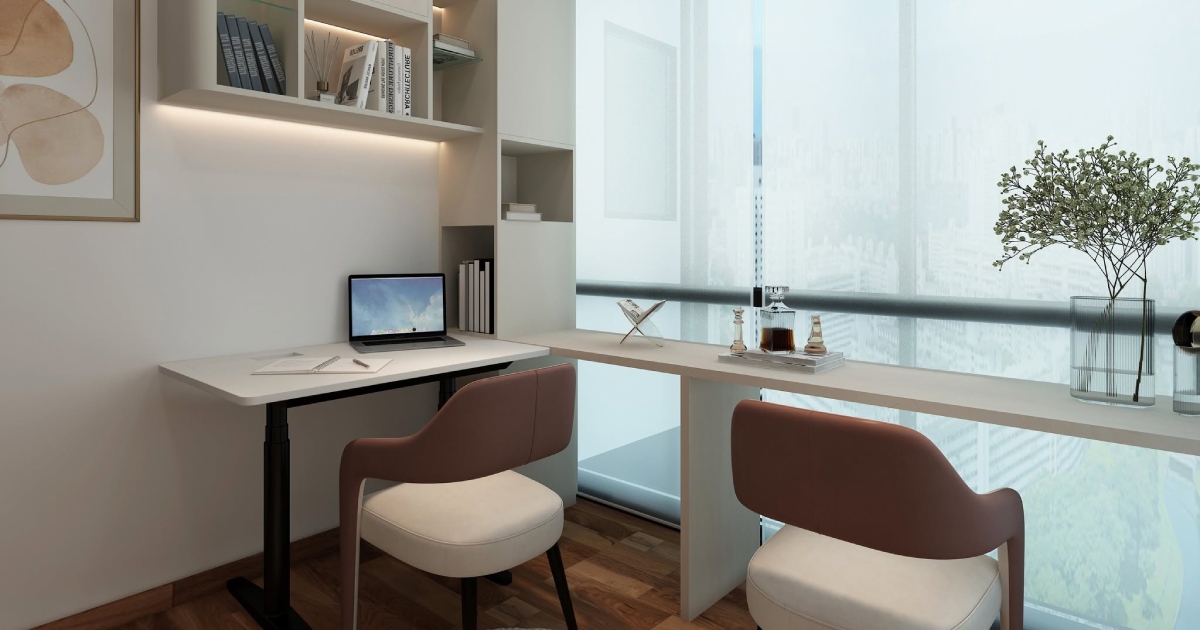
Working from home has quietly shifted from a temporary arrangement to a permanent fixture for many Singaporeans, and the conversations around it have grown more nuanced as a result. How do you build a setup that genuinely supports long hours and back-to-back calls, without your living room beginning to resemble a corporate floor? That balance is very much achievable, and getting there is more about deliberate planning than spending more money.
Start with the space, not the shopping list
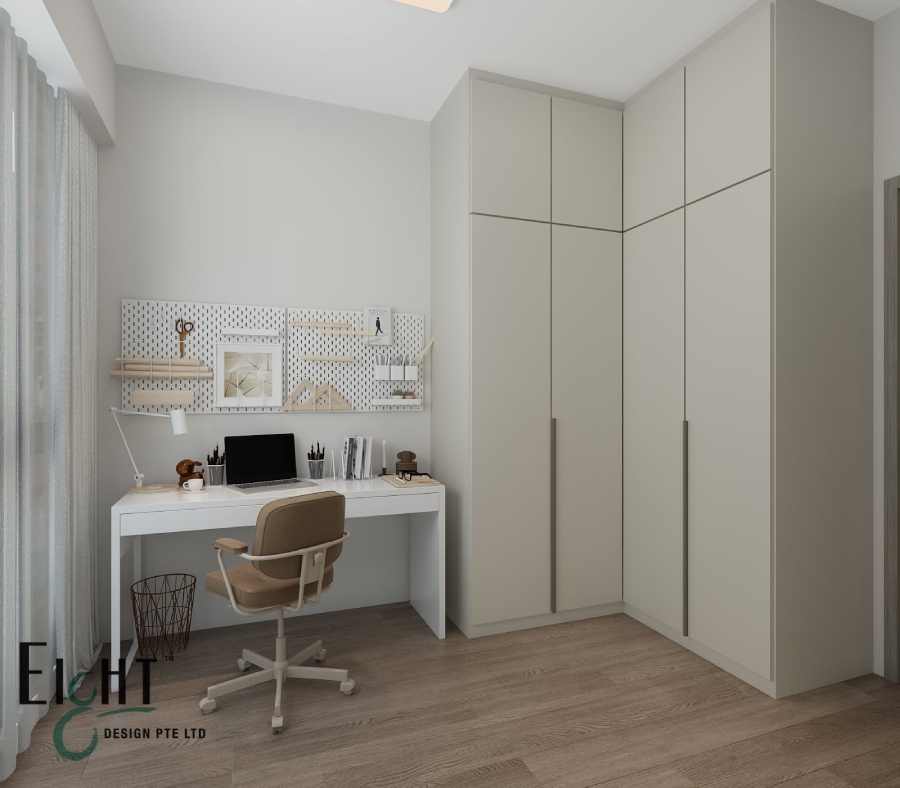
Before you begin looking at desks or chairs, it is worth understanding the space you are working with. Dedicated study rooms are a luxury that most Singapore homes simply do not accommodate, so the workstation tends to live in a corner of the bedroom, along a living room wall, or carved out of an alcove that previously served no particular purpose.
Where you place the workstation shapes every decision that follows. A corner setup with built-in cabinetry above can contain your work life neatly within a defined zone, so that closing the cabinet doors at the end of the day creates a visual shift that helps your mind disengage from work mode. A wall-mounted desk that folds flat works particularly well in smaller HDB flats where a room needs to serve multiple purposes across the day. What you are really designing is a boundary, one that signals to your brain when the working day begins and when it ends, without requiring a separate room to achieve it.
This early stage of planning is also where interior design services prove their value most clearly. Rather than piecing together individual furniture purchases that may not fit the space or complement one another, a considered approach from the outset ensures the workstation feels like a natural extension of the home rather than something placed inside it.
The desk deserves more consideration than it usually gets
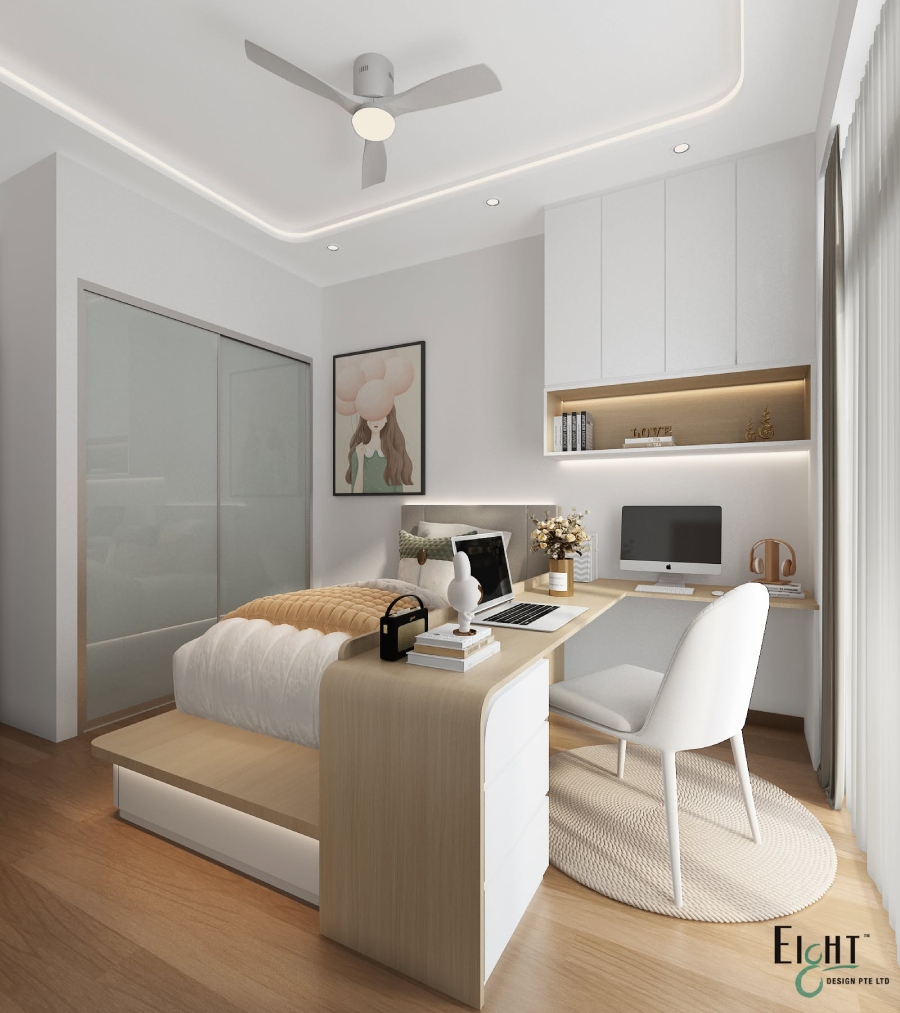
Most people spend a disproportionate amount of time choosing accessories and peripherals while giving relatively little thought to the desk itself, which is unfortunate, as the desk is the anchor around which everything else is arranged. Choose it well and the rest of the setup becomes significantly easier to get right.
For homes where aesthetics are a genuine priority, a solid timber surface or one with a timber-effect finish tends to sit comfortably within residential interiors and age gracefully over time. Heavily industrial finishes like raw steel or powder-coated black metal can work, but only if the surrounding space already leans in that direction. A floating desk fixed directly to the wall not only preserves floor space but also creates a sense of lightness that contributes to the overall feel of the room.
If the budget allows for custom carpentry, a built-in desk running the full length of a wall with integrated shelving above and drawers below is one of the most effective solutions available. That kind of seamless joinery is what separates a workstation that looks designed from one that looks assembled, and locally, having access to in-house carpenters who understand both function and residential finish makes a considerable difference to the final outcome.
Cable clutter undoes everything else
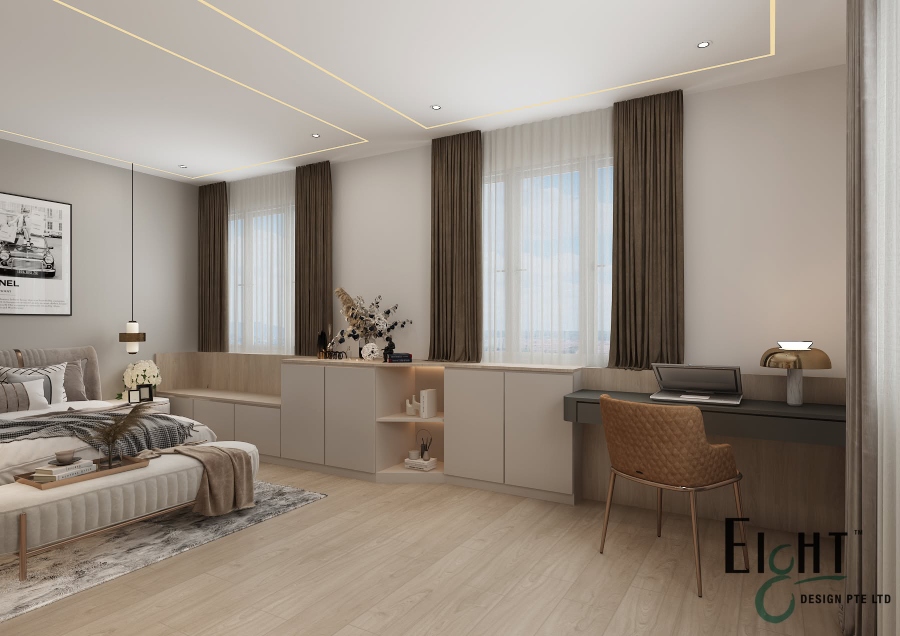
Regardless of how carefully the furniture is chosen, visible cable clutter will compromise the overall effect almost immediately. Cable management is one of the most impactful parts of a home workstation setup and consistently one of the most overlooked.
A desk with a built-in cable tray underneath keeps power strips and bundles out of sight without requiring much additional effort. Running cables through the wall to a concealed power point is the cleanest solution possible, though it does require planning at the renovation stage rather than after the fact. For an existing setup, a cable management box finished in a colour that matches the desk surface handles the problem reasonably well without any structural changes.
The broader principle here extends beyond cables. Every element that would look perfectly ordinary in an office environment needs to be reconsidered when it enters a home. Monitor arms, headphone hooks, charging stations, and even pen holders all exist in designs that function just as effectively as their utilitarian counterparts while sitting far more comfortably in a residential setting.
Lighting shapes how the space feels
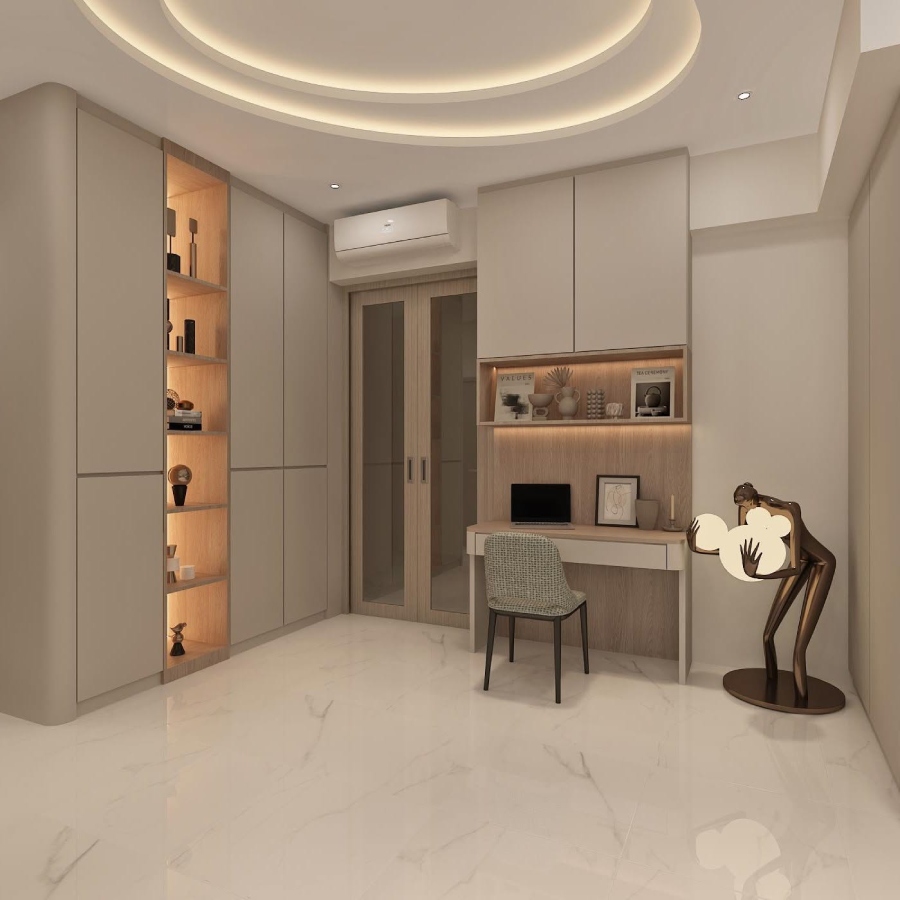
Office environments typically rely on overhead fluorescent lighting, which does the functional job adequately but is not particularly pleasant to spend extended hours beneath. At home, there is considerably more freedom to approach lighting in a way that serves both productivity and atmosphere.
A desk lamp with a warm but focused output reduces eye strain and reads as residential rather than clinical. If the workstation receives natural light, positioning the desk perpendicular to the window rather than facing it or sitting with the window directly behind you reduces glare on the screen while still drawing in daylight. Layered lighting tends to work well in home workstations that double as living spaces, where an overhead pendant or ceiling light establishes the ambient tone, a desk lamp handles the task lighting, and a soft LED strip behind the monitor eases the contrast during long evening sessions. The combined effect makes the space feel considered rather than improvised.
Keep the visual language consistent
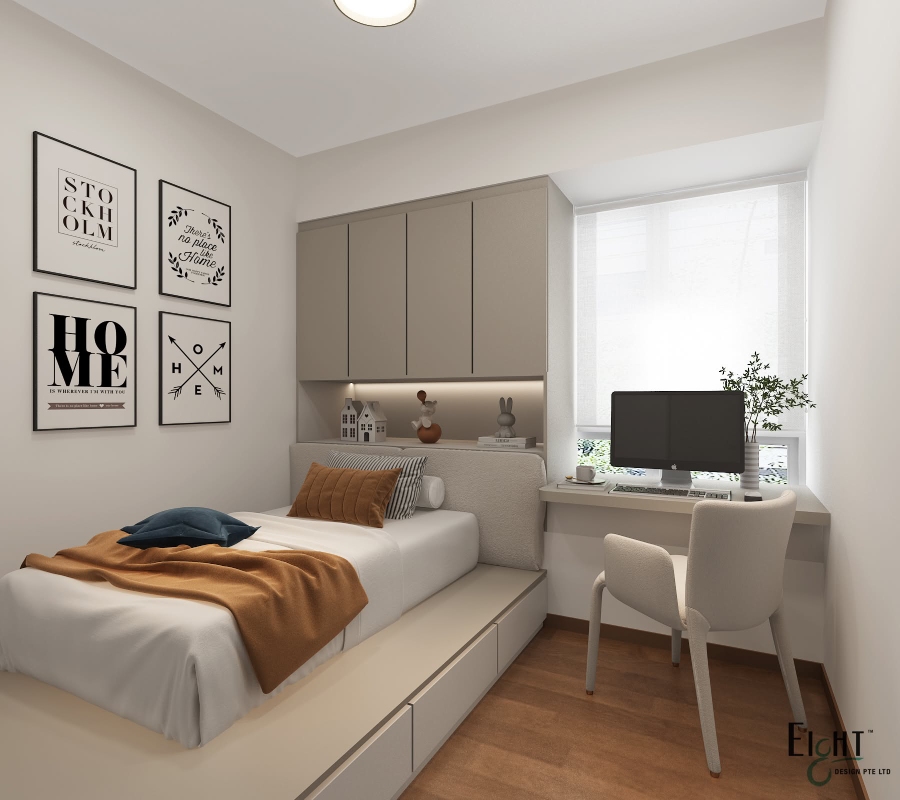
One of the more common mistakes in setting up a home workstation is treating it as a category apart from the rest of the home, subject to its own aesthetic rules. A workstation in a Japandi-style interior need not pivot toward industrial design simply because it serves a professional function. The materials, tones, and general visual language should extend naturally from the surrounding space.
If the home features warm neutrals and natural textures, those choices should carry through into the desk area. If the overall palette leans more contemporary with cooler tones and clean geometry, the workstation should reflect that same sensibility. The goal is for the work area to read as a deliberate part of the room rather than a separate zone that happens to share the same floor space.
This is also worth keeping in mind when considering the home’s broader layout, particularly in flats where space is at a premium. Those planning a more comprehensive refresh may find it useful to read about maximising storage without losing style, since workstation planning and storage design frequently need to be addressed together to get the best result from a limited footprint.
Small decisions with outsized impact
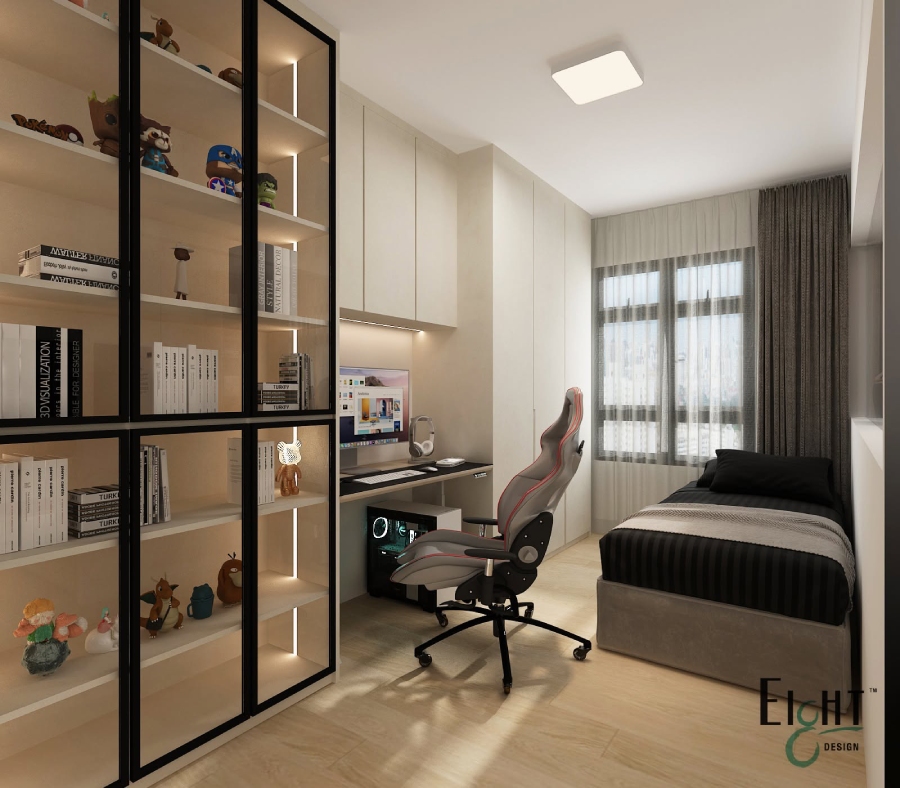
A few specific choices tend to make a disproportionate difference to how a home workstation looks and functions day to day.
- A monitor arm or riser that elevates the screen to eye level creates a cleaner desk surface, reduces neck strain during long sessions, and removes the visual bulk of a monitor sitting directly on the desk.
- A pinboard or corkboard in a slim frame mounted above the desk provides a proper surface for notes and references, eliminating the creeping spread of sticky notes across the monitor and surrounding surfaces.
- A small plant on the desk or a nearby shelf adds a living element that softens the overall setup and connects it more naturally to the rest of the room’s aesthetic.
- A closed-door cabinet within reach for storing work equipment at the end of the day is one of the most underrated additions, because the ability to physically put work away matters as much as how the space looks during working hours.
A space that works as hard as you do
A home workstation that genuinely functions well and genuinely looks good is not primarily a question of budget. It is a question of making considered decisions, understanding the space as a whole, and ensuring that the work area earns its place in the home without coming to define it.
If you are planning a renovation or looking to redesign a room around a more thoughtful work-from-home setup, Eight Design would be happy to help you bring it together. View our residential portfolio to see how we have helped homeowners across Singapore create spaces that balance daily life with the practical realities of how they actually live and work.