

Planning a renovation is already a lot to manage. It’s easy to treat smart home technology as something you can add later, once the dust has settled. But here’s the thing: retrofitting smart systems after the fact is almost always more disruptive and more expensive than building them in from the start.
Whether you’re doing a full gut renovation or a focused refresh of a few rooms, this is the ideal window to future-proof your home. With Singapore’s high adoption rate of smart home technology (the country consistently ranks among the top in Asia for smart home readiness, according to Statista), it makes sense to think ahead and design with connectivity in mind.
Start with infrastructure, not gadgets
The most common mistake homeowners make is jumping straight to devices. Smart bulbs and voice assistants are appealing, but they’re only as good as the infrastructure beneath them.
Before anything gets installed, you need to ask: “Is my home wired for this?”
The foundation of any smart home starts with two things: a robust Wi-Fi network and adequate electrical planning. During renovation, this is the right time to discuss with your contractor where access points should be placed to avoid dead zones, whether you need a structured cabling setup, and where additional power points might be needed to support smart devices without running visible cables everywhere.
This is also when working with experienced providers of interior design services in Singapore pays off. A good design team won’t just think about how your home looks, they’ll help coordinate between your ID, contractor, and any smart home specialist so that technology is integrated into the design rather than bolted on afterwards.
Plan room by room
Different spaces have different needs, and a smart home plan that treats every room the same is likely to feel overwhelming and unnecessary. Here’s a more practical way to think about it:
- Living room – This is typically where most homeowners invest in smart technology first, and for good reason. Smart lighting scenes, motorised curtains or blinds, and a central entertainment system all make daily life noticeably more comfortable. If you’re planning built-ins, let your designer know you want cable management factored in.
- Kitchen – The kitchen benefits most from smart appliances with energy-monitoring capabilities. Look for Energy Star-rated appliances when shopping. Smart plugs can also help monitor smaller appliances without needing a full overhaul.
- Bedroom – Automated lighting that adjusts with your circadian rhythm, smart air conditioning controls, and motorised blackout blinds are worth considering here. These comfort upgrades genuinely support better sleep.
- Front door and common areas – Smart locks and video doorbells are among the gadgets worth the investment, particularly for families with children or elderly parents at home. They also add a layer of security that doesn’t require complex systems.
Speak the same language as your contractor
One of the least talked-about challenges of smart home integration is communication. Your interior designer, contractor, electrician, and smart home vendor each have their own priorities and vocabulary. Without someone coordinating between them, things fall through the cracks, literally. A conduit that should have been laid before the false ceiling was closed gets missed, and suddenly you’re hacking walls again.
Here are a few practical things to align on before work begins:
- Conduit planning: Lay empty conduits during renovation so future cabling can be threaded through without disrupting walls.
- Hub placement: Decide early where your smart home hub or router will sit, and ensure there’s a dedicated power point for it.
- Switch placement: If you want smart switches, the wiring requirements differ from standard switches, and your electrician needs to know upfront.
- Neutral wire requirement: Many smart switches require a neutral wire, which older Singapore flats may not have; check this before purchasing any devices.
The Housing Development Board offers guidelines on what renovations require approval, which is worth reviewing if you’re in an HDB and planning significant electrical work.
Choosing a smart home ecosystem
Before buying a single device, decide which ecosystem you’re building around. The main players are Google Home and Amazon Alexa, each with its own strengths. The important thing is to choose one and be consistent, as mixing ecosystems can lead to compatibility headaches down the line.
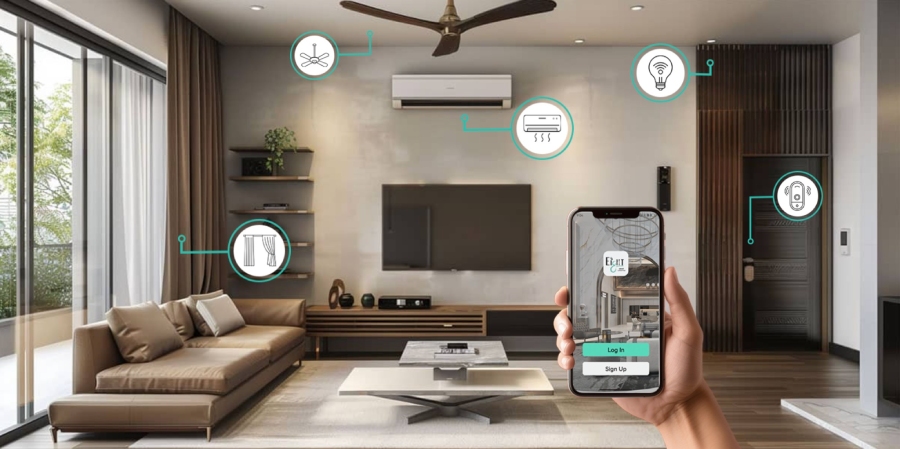
That said, if you’d prefer a solution that’s been designed specifically with Singapore homes in mind and one that comes fully integrated with your renovation, Eight Design’s own Eight Smart system is worth a serious look. Rather than piecing together devices from different brands and hoping they play nicely together, Eight Smart brings everything under one roof: smart lighting, motorised curtains and blinds, air conditioning control, ceiling fans, smart doorbells, and more, all managed through our in-house designed app, available on both iOS and Android.
What makes this particularly practical during a renovation is that Eight Design handles both the interior design and the smart home integration together. There’s no need to separately coordinate with a third-party smart home vendor, as our team already knows your floor plan and lifestyle, so the technology is built in as part of the design rather than added as an afterthought.
If you’re uncertain about where to start with ecosystems, starting with Matter-compatible devices is still a sensible move for anything outside of Eight Smart’s coverage. Matter is an open-source smart home standard now supported by most major brands, meaning your devices are more likely to work together regardless of what you’re running at home.
Don’t overbuild
There’s a tendency, especially in renovation planning, to want everything at once. But a smart home that’s too complicated often ends up not being used properly. Automations that require too many steps get abandoned; systems that don’t work intuitively cause frustration rather than convenience.
A better approach is to prioritise the areas where technology will genuinely improve your everyday routine, get those right first, and expand from there. Think of it less as a one-time installation and more as a living system that grows with you. It’s also worth budgeting realistically. Smart home integration during renovation doesn’t have to mean a full-scale overhaul. Even simple additions like smart lighting in the living room or a video doorbell can make a meaningful difference without stretching your budget.
Build it right the first time
Renovation is one of those rare moments when your home is completely open with walls exposed, cabling accessible, and systems being reset from scratch. It’s genuinely the best opportunity you’ll ever have to build in smart features affordably and without compromise. The key is to think ahead and not treat technology as an afterthought. A home that’s been thoughtfully designed for modern living will be more efficient, and ultimately, more valuable in the long run.
If you’re planning a renovation and want guidance on how to integrate smart home features into your design seamlessly, contact Eight Design for a custom quote. Our team brings together design expertise and practical renovation know-how to help you build a home that works as beautifully as it looks.