

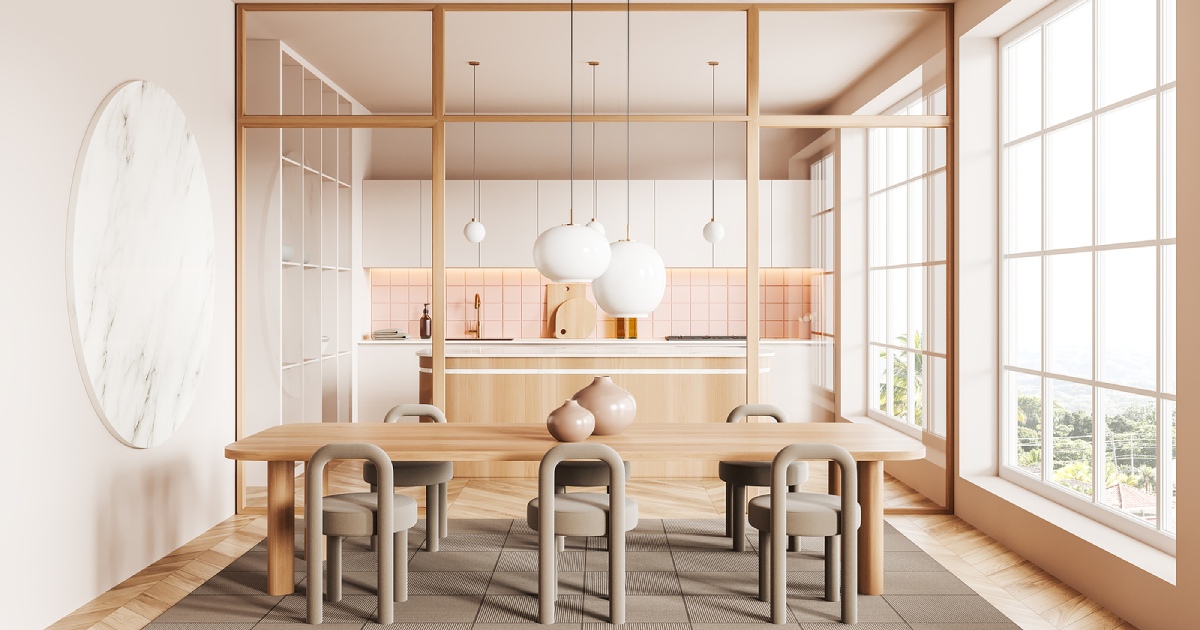
Small BTO flats and spacious landed homes may sit at opposite ends of Singapore’s housing spectrum, yet both are facing the same design question: how do you keep spaces feeling open without sacrificing practicality? Glass zoning has quietly become the answer many homeowners are turning to, and it’s gaining momentum for very good reasons.
Homeowners today want flexibility. Open layouts once felt like the ultimate modern upgrade, but daily living has revealed their limits, especially in Singapore, where cooking styles, humidity, and compact layouts demand smarter planning. Glass zoning offers a middle ground that feels contemporary while still supporting real-life routines.
The shift away from fully open kitchens
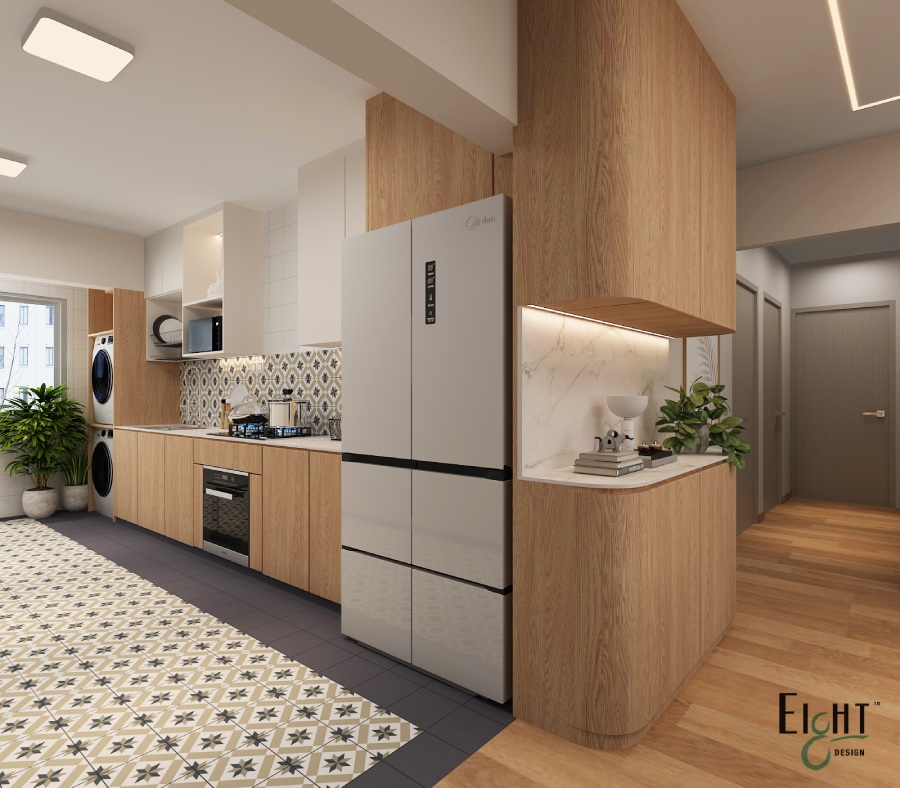
Open kitchens became popular because they made homes look larger and brighter. Removing walls allowed natural light to travel further and encouraged social interaction while cooking. For many families, that openness initially felt refreshing.
However, Singaporean households quickly discovered practical challenges. Asian cooking often involves simmering spices and high heat, which produces grease and strong aromas. According to a feature by CNA, cooking fumes and splatter can easily travel into living spaces in open layouts, affecting furniture and soft furnishings if not properly managed.
Instead of returning fully to enclosed kitchens, homeowners began searching for something more balanced. Enter glass zoning.
What exactly is glass zoning?
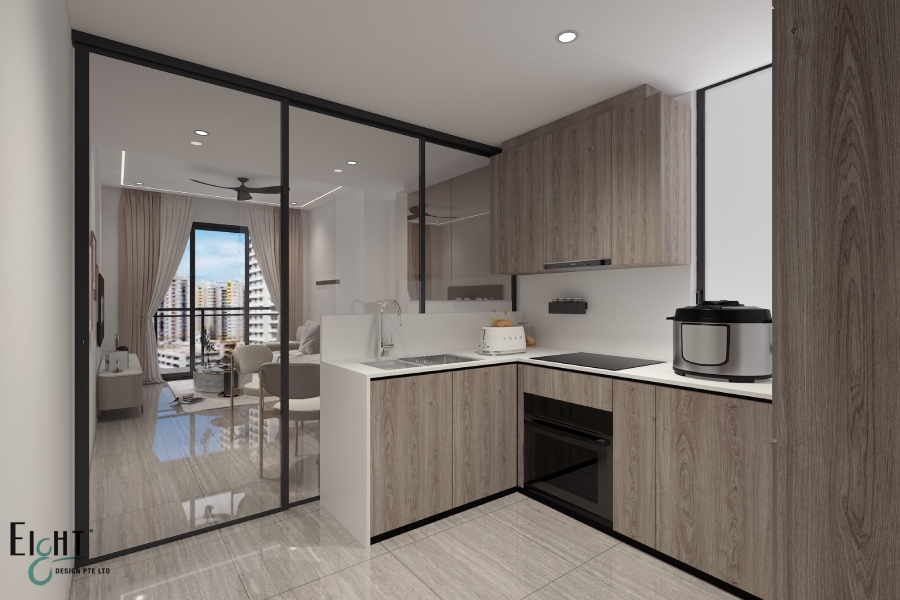
Glass zoning refers to using transparent or semi-transparent panels, sliding doors, or framed partitions to separate spaces visually without blocking light. Unlike traditional walls, glass maintains sightlines across the home while still creating functional separation between zones. The kitchen remains connected to the living area, yet cooking activity stays contained.
This approach works especially well in Singapore homes because it adapts to different lifestyles. Whether you cook daily or only occasionally, the space can feel open without becoming messy or overwhelming.
Why glass zoning works so well
1. It handles cooking realities better
Ventilation is a major concern locally. Singapore’s tropical climate and flavour-rich cuisine mean kitchens generate heat and lingering smells quickly if airflow isn’t controlled.
Glass partitions help by:
- Containing grease and odours during heavy cooking
- Allowing extractor hoods to work more efficiently
- Preventing fumes from spreading into sofas, curtains, and electronics
Instead of choosing between openness and practicality, homeowners get both.
2. It complies with renovation restrictions
Not every HDB layout allows full wall removal. Structural and safety requirements, especially for flats using gas hobs, may limit open-concept renovations. Many homeowners, therefore, adopt glass partitions as a compliant alternative that still achieves an open feel. This makes glass zoning particularly attractive for BTO owners who want modern aesthetics without renovation complications.
3. Homes feel bigger without losing structure
Design psychology plays a huge role here. Transparent boundaries trick the eye into perceiving greater depth while still organising movement through the home. A well-placed glass divider becomes a subtle way to define your home space for flow and function, allowing daily routines to feel intuitive rather than chaotic. Instead of one large, undefined area, each zone has a purpose while remaining visually connected.
Why designers are recommending glass over walls
Many homeowners engaging interior design services in Singapore are now prioritising flexibility rather than permanent layouts. Glass zoning supports this shift because it adapts easily over time.
Here’s why designers increasingly favour it:
- Sliding panels can be opened during gatherings
- Closed panels contain cooking mess during meal prep
- Natural light travels deeper into the home
- Spaces feel organised without appearing smaller
The result is a home that works equally well for hosting guests, working from home, or relaxing quietly at night.
Glass zoning vs open kitchens: A practical comparison
| Feature | Fully Open Kitchen | Glass Zoned Kitchen |
| Visual openness | Excellent | Excellent |
| Odour control | Limited | Strong |
| Noise containment | Low | Moderate |
| Flexibility | Fixed layout | Adjustable |
| Cleaning effort | Higher | Easier to manage |
Open kitchens still have their place, but glass zoning solves many of the real-life frustrations homeowners experience after moving in.
A better fit for modern BTO living
Modern BTO flats prioritise efficiency, which often means smaller kitchens. With limited windows and tighter layouts, airflow becomes especially important. Mechanical ventilation and smart layout planning are essential to maintaining comfort.
Glass zoning helps maximise every square metre because it:
- Preserves precious natural light
- Avoids visually shrinking compact homes
- Keeps work zones clearly organised
- Supports safer cooking layouts
Instead of competing functions sharing one space, each activity gets its own defined area.
Design styles that pair well with glass zoning
Glass partitions aren’t limited to one aesthetic. They integrate easily into many popular renovation styles.
- Minimalist homes benefit from slim black frames that add definition without clutter.
- Japandi interiors often use fluted or lightly textured glass to soften transitions between spaces.
- Modern luxury designs may incorporate bronze or tinted panels for a more refined feel.
Because glass reflects light, it also enhances neutral palettes commonly used to make homes appear calmer and more spacious.
Planning costs and renovation considerations
Kitchen renovations vary widely depending on materials and scope. Kitchen renovations alone can range from roughly $10,800 to $22,300, depending on property type and finishes.
When budgeting for glass zoning, homeowners typically consider:
- Frame material (aluminium, steel, or frameless systems)
- Type of glass (clear, fluted, tinted)
- Sliding versus fixed panels
- Integration with carpentry and lighting
Because glass zoning often avoids heavy demolition, it can sometimes reduce hacking costs compared to fully open concepts.
Designing a kitchen that works beautifully every day
Glass zoning represents a thoughtful evolution rather than a passing trend. It keeps homes bright and connected while respecting the realities of cooking and daily living in Singapore.
For homeowners planning a renovation, the goal is to create a space that feels comfortable years from now. When openness and practicality meet in balance, homes naturally become easier to live in.
If you’re exploring ways to redesign your kitchen or rethink your layout, view our portfolio to see how Eight Design approaches glass zoning solutions tailored to modern Singapore homes.